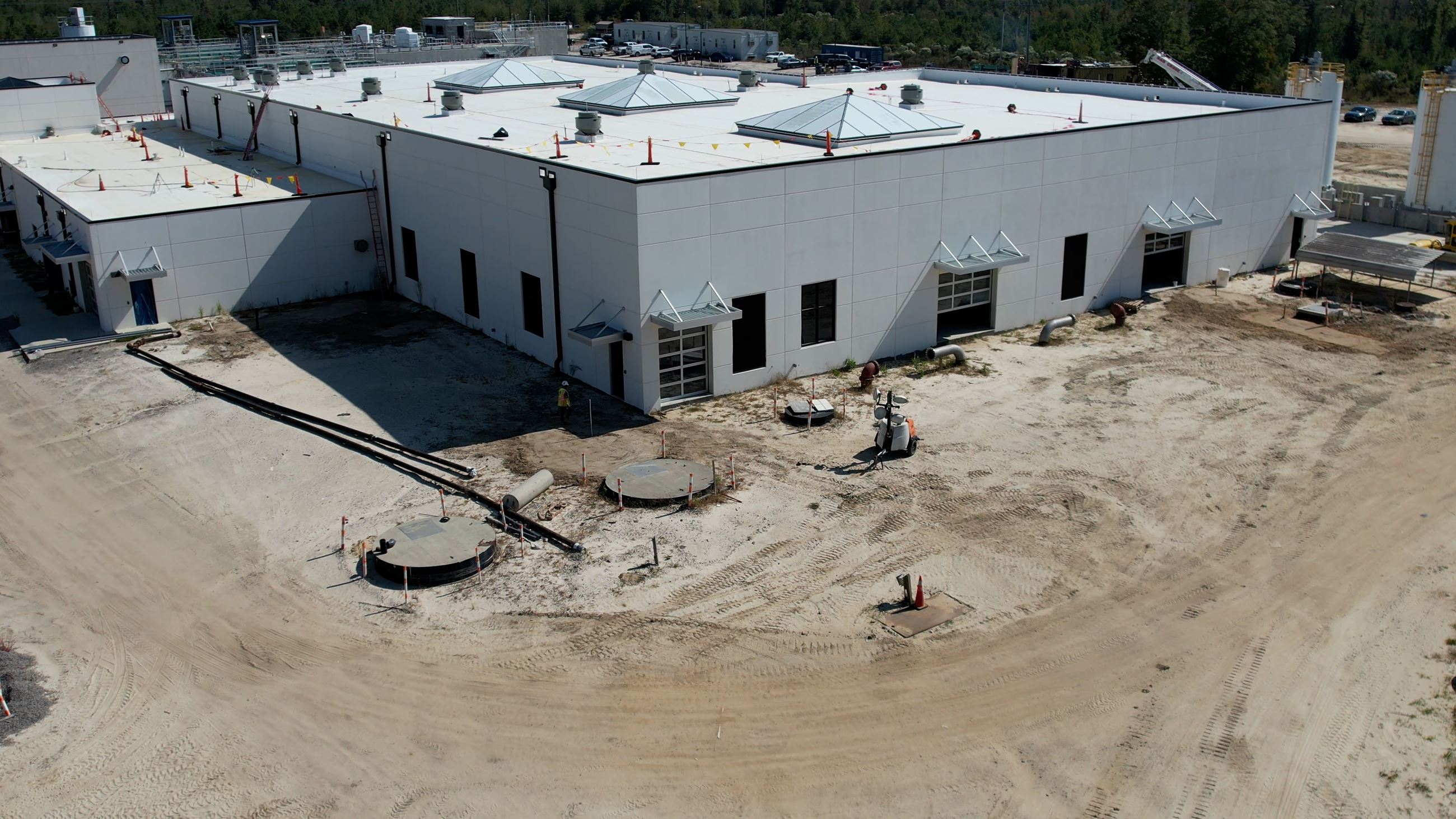
 Left: Aerial view of new Reverse Osmosis Facility at the Northwest Water Treatment Plant Left: Aerial view of new Reverse Osmosis Facility at the Northwest Water Treatment Plant
| 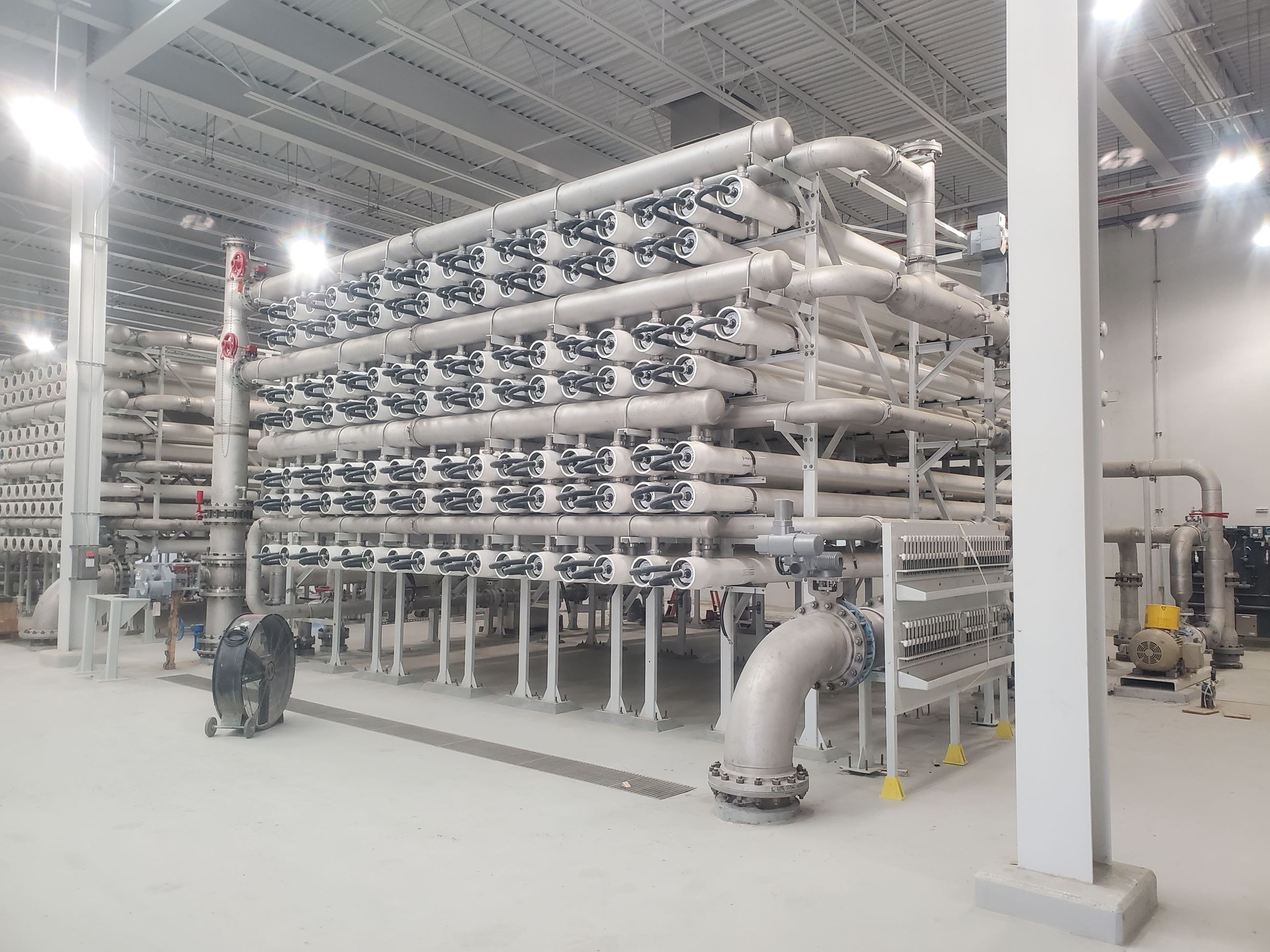 Right: One of the new low-pressure reverse osmosis skids at the Northwest Water Treatment Plant Right: One of the new low-pressure reverse osmosis skids at the Northwest Water Treatment Plant
|
The project to install an advanced low-pressure reverse osmosis water treatment system and expand capacity at Brunswick County’s main water plant continues to progress. Once completed, the Northwest Water Treatment Plant will be the second largest reverse osmosis water treatment plant in the nation.
There are two core parts of the project: One is a major expansion effort to increase the amount of water that can be treated at the plant by an additional 12 million gallons per day (MGD) to accommodate future growth in the water system; the other part is the installation of a low-pressure reverse osmosis water treatment system to remove per- and polyfluoroalkyl substances (PFAS) found in the Cape Fear River due to releases from Chemours’ Fayetteville Works facility.
All of Brunswick County's water customers and wholesale* municipal water customers receive either all or part of their water from the Northwest Water Treatment Plant. Once completed, the plant will have the capacity to treat more than 36 million gallons of water per day using the new reverse osmosis treatment system.
The project is estimated to be about 85% complete as of January 2025. Some of the most recent developments in the project’s construction include:
- Both the east and west conventional rapid mix processes are complete and are now a permanent part of the treatment process. Rapid mixing is one of the first steps in the treatment process and involves mixing a coagulant into raw water to destabilize particles and allows them to clump (flocculate) and later filter out during the sedimentation phase.
- Upgrades and modifications to the east clarifier have come online this month. Clarifiers work to remove solids from water by permitting heavier and larger particles to settle to the bottom of the tank, allowing the clean water to be collected at the top and proceed through the rest of the treatment process.
Both of these elements are crucial steps in expanding the plant’s treatment capabilities. Next steps for the County’s contractor include new filtration basins, disinfection systems and testing in order for the plant to start taking in more raw water for treatment using the current conventional process. Once the expanded capacity is brought online, crews will finalize any remaining work and tests necessary to begin operating the reverse osmosis treatment system.
“We all live and work in this community, and we know how important this project is to our residents and water customers because we also use the water that comes from this water plant every day,” said John Nichols, Brunswick County Public Utilities Director. “Brunswick County is doing its utmost to ensure our contractor completes the project as timely as possible while meeting the specific quality standards required for a project of this magnitude and sophistication.”
The project contractor’s latest schedule estimates the expanded capacity will be available in early spring 2025 and the reverse osmosis treatment system will become operational by late spring 2025.
The project contractor has experienced some delays, which has prolonged the construction timeline. Brunswick County intends to deduct liquidated damages from the project cost due to these delays.
“We know our residents, myself included, are frustrated and anxious to see this project completed,” said Brunswick County Chairman Mike Forte. “We would all like to see this project finished as soon as possible, but an endeavor of this scope and magnitude requires patience to ensure we get it right. We continue to push toward finishing our project timely and effectively while also making sure we hold polluters responsible for the contamination of our county’s main source of drinking water.”
Brunswick County has been concerned about the presence of PFAS in our drinking water since 2017 when news broke that the Cape Fear River had been contaminated by GenX and other PFAS as a result of releases from Chemours’ Fayetteville Works facility. The County immediately began seeking solutions to remove PFAS compounds from our drinking water. The reverse osmosis system being installed is considered the most effective treatment system to remove contaminants like GenX, PFOA, PFOS, and other PFAS compounds from drinking water.
Brunswick County also joined other utilities in the region to sue DuPont and Chemours. The County is seeking monetary damages from Chemours to hold it responsible for the millions of dollars it is spending to install a new treatment system necessary to remove PFAS contaminants. The lawsuit remains active and ongoing.
Earlier this year, the U.S. Environmental Protection Agency (EPA) announced its final rule to establish legally enforceable drinking water standards for six PFAS compounds known to occur in drinking water. Public water systems like Brunswick County will have five years (by 2029) to comply with the standards. The new reverse osmosis treatment system will be able to remove GenX and PFAS compounds from our drinking water and meet the new standards announced for these six PFAS compounds.
To learn more about PFAS and how to reduce your exposure, visit the Understanding PFAS webpage on the NC Department of Environmental Quality’s website. Brunswick County also has information on its weekly PFAS testing process, opportunities for private drinking water wells to test for PFAS, and answers to frequently asked questions on our GenX/PFAS Information webpage.
The County will provide additional updates over the coming months as the project progresses toward completion. Individuals can learn more and follow progress on the Northwest Water Treatment Plant Expansion and Reverse Osmosis Treatment Upgrades Project at brunswickcountync.gov/nwtp.
-30-
*Not sure if you get your water from the Northwest Water Treatment Plant? If your property/home receives a water bill from any of these entities, then you will benefit from the low-pressure reverse osmosis treatment system being installed at the plant:
- Brunswick County Utility Billing
- Village of Bald Head Island
- Town of Holden Beach
- Town of Oak Island
- Town of Ocean Isle Beach
* Within the Southport, St. James, Oak Island, and Caswell Beach areas, water from the Northwest Water Treatment is blended with water from the Highway 211 Water Treatment Plant to serve customers. St. James receives primarily groundwater from the 211 Water Treatment Plant but receives blended water between both plants during the peak times of the year or when the 211 Water Treatment Plant is being serviced. The Highway 211 Water Treatment Plant sources its water from groundwater wells. Bald Head Island has its own treatment plant, but supplementary water is supplied by the 211 Water Treatment Plant, or blended water from both county plants. All other customers in the County’s service area receive their water solely from the Northwest Water Treatment Plant.